

Labour's Billion Dollar Blunders: Hipkins Dodges Again as Costings Collapse
New Zealand cannot afford another round of Labour’s fantasy economics. Voters are waking up to the pattern: announce the shiny promise, dodge the cost, blame someone else when the numbers fall apart.

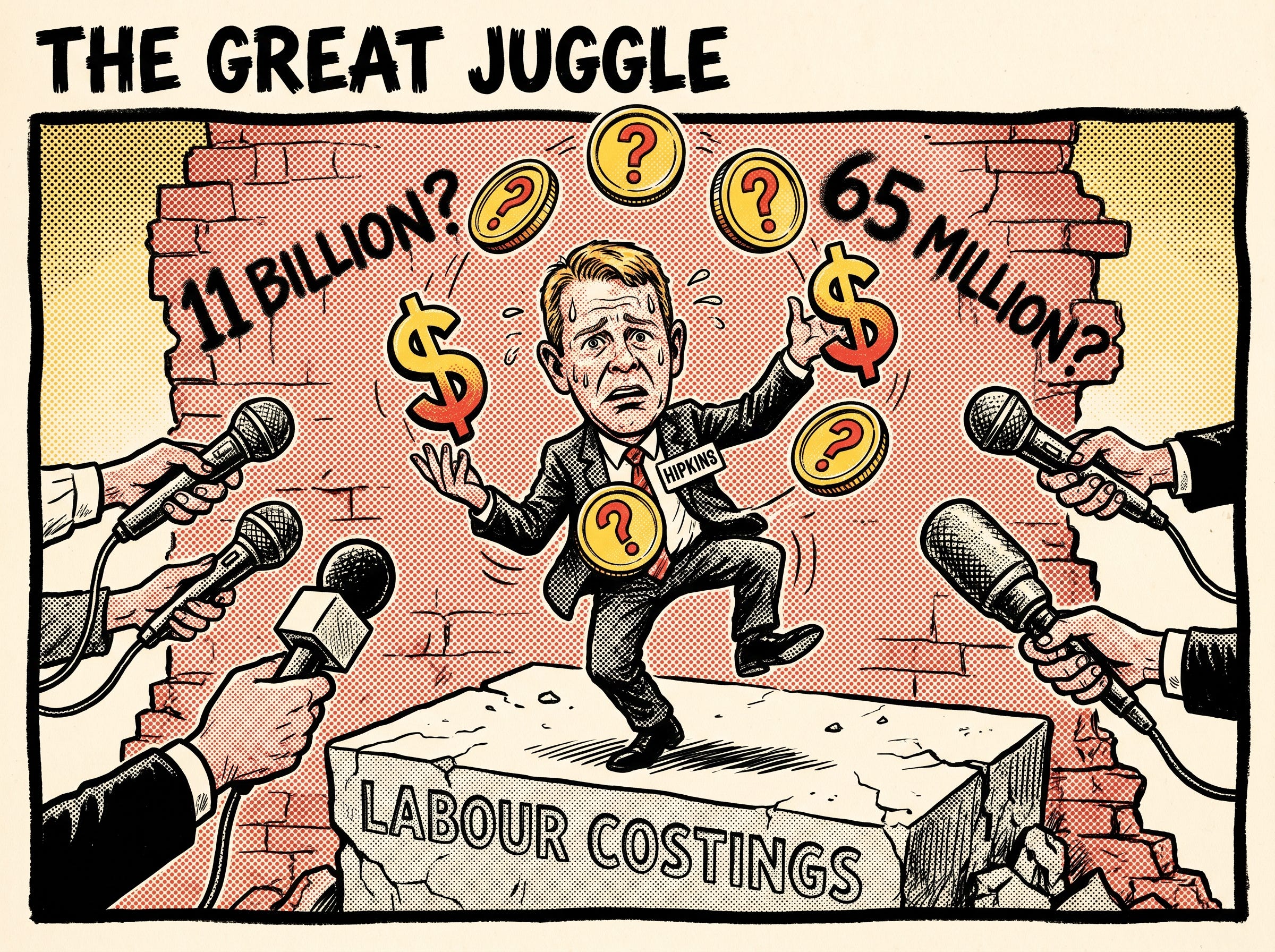
Labour is fast developing a malign reputation for shooting off their mouth without doing the basics like fully costing and explaining precisely how they are going to pay for their lofty promises.
Yesterday Chris Hipkins got hammered over another multi billion dollar promise he cannot or will not say how it will be paid for. On TVNZ Breakfast the Labour leader faced repeated questions about whether he would reinstate Labour’s pay equity and fair pay agreements scheme if it cost 11 billion dollars, the figure Treasury is said to have estimated.
Hipkins avoided a clear yes or no answer. Instead he argued that Finance Minister Nicola Willis has not released full information and is solely responsible for the 11 billion dollar claim. Willis pushed back hard, calling Hipkins comments misleading and confirming Treasury had clearly costed the impact of reverting to the previous pay equity regime.
Willis defended the Government’s changes, saying the previous system was fiscally unsustainable and that the revised approach was necessary despite being difficult. Hipkins kept reiterating his strong opposition to the cancellation of pay equity processes for workers but refused to commit to restoring the full scheme at the stated cost.
This is classic Hipkins. Big talk on spending other peoples money, zero detail on where it comes from.
Then RNZ popped his transport fare cap balloon. Labour’s public transport fare cap policy, announced by Hipkins, is estimated by them at 65 million dollars per year. Economists say the real cost is likely higher.
RNZ went to Infometrics, a firm with left leaning credentials, but even they could not agree with Labour’s numbers. Economists Sam Warburton and Brad Olsen estimate the policy would cost about $91 million to $112 million annually, not $65 million.
The key issues are glaring. Labour used a short term 6.4 percent increase in public transport use, but economists say the annual effect is closer to 13.5 percent. That means more services needed and higher costs.
Labour also failed to properly factor in reduced fuel excise and road user charges as people shift from cars to public transport. On top of that they understated growth in patronage and fares since 2023, including higher baseline usage and ongoing fare inflation.
When all adjustments are combined Warburton estimates a revised cost of roughly $91 million to $112 million. He suggests the cap would need to rise to about $26 or $27 per week just to match Labour’s own cost target.
Those are two big promises from Labour and they are yet to tell us how they will fund them, either through massively increasing borrowing or worse still massively increasing taxes.
These are just Labour’s promises. When you add up the truly bizarre promises from Te Pāti Māori and the lunatic ideas of the Green Party then you will have eye watering debt or eye watering tax increases to pay for all the lunacy.
Labour should expect this level of scrutiny up to the election but it will not come from the legacy media who just try and run interference on Labour’s behalf. Watching the idiot Press Gallery asking questions of Nicola Willis on the weekend shows just how out of their depth the Gallery has become.
New Zealand cannot afford another round of Labour’s fantasy economics. Voters are waking up to the pattern: announce the shiny promise, dodge the cost, blame someone else when the numbers fall apart. Hipkins and his team keep serving up the same old dish and expect us to swallow it without question. Not this time.